
Start here · Format & Workflow
Outlining and Beat Sheets
How to plan enough to feel supported without planning so much that you never discover the film on the page.
01 / The idea
How much should a screenwriter outline?
Enough to expose major causal and character problems before pages become expensive, but not so much that the outline prevents useful discovery. Different writers need different amounts of certainty.
Formatting is meant to help the reader forget they are reading. Once the basics are right, the page gets out of the way and the film can start playing in their head.
02 / What to remember
Three things worth holding onto
None of this is about looking clever or perfectly ‘industry’. It's about being considerate to the next person who opens the PDF and giving your story the cleanest possible read.
Outline decisions, not just events
A beat gains value on the page when it records what someone chooses and what becomes different because of it.
Use the smallest useful document
A logline, one-page synopsis, beat sheet and scene list answer different questions. Do not inflate all of them.
Revision can begin in the outline
Moving index cards is cheaper than moving twenty finished pages, especially when a sequence lacks consequence.
03 / On the page
Try it this way
Set things up once, keep the process simple and save your attention for the writing. The best workflow is usually the one you can still trust at eleven o'clock the night before a deadline.
- 1
Start with the spine
Mark disruption, commitment, midpoint change, crisis, climax and where everyone ends up.
- 2
Add sequence goals
Give each movement a short-term goal and outcome.
- 3
Expand into scenes
For each card, note objective, resistance and turn rather than writing a miniature screenplay.
- 4
Draft and update
Let pages teach you. Revise the outline when a discovered choice improves the story.
04 / Trouble spots
If this feels familiar, take another look
The outline lists locations rather than drama.
Every beat has equal detail and importance.
Preparation continues after the central problems are understood.
The writer obeys an obsolete outline over a better scene discovery.
Don't treat this list as a scorecard. Every draft has a few of these. Pick the one causing the most trouble, find the earliest place it appears and work forward from there.
05 / Have a go
Try this on your script
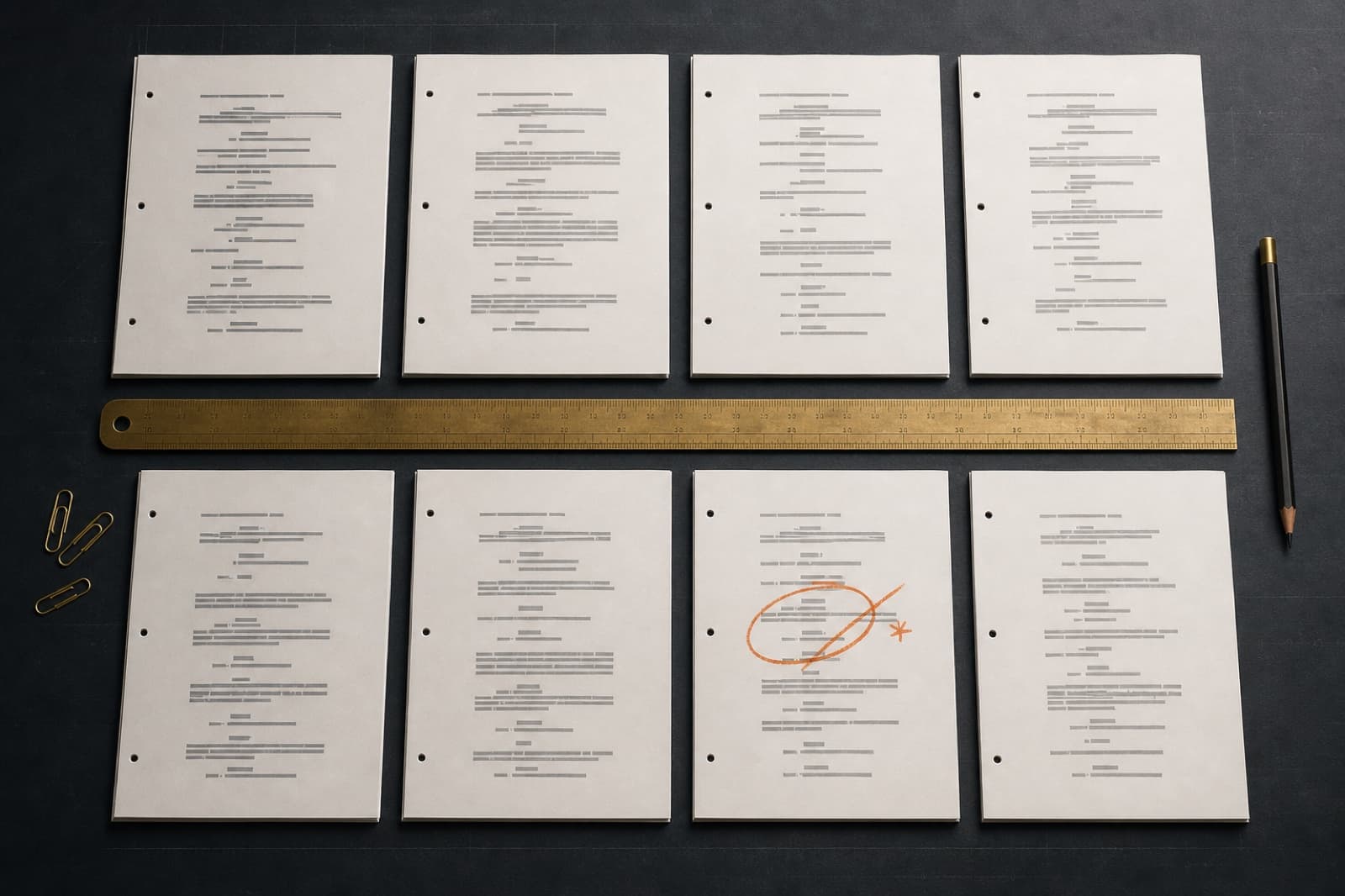
Create a forty-card scene list, then remove five cards without losing the plot. The exercise exposes beats that repeat function or lack consequence.
A couple of questions writers ask
How much should a screenwriter outline?
Enough to expose major causal and character problems before pages become expensive, but not so much that the outline prevents useful discovery. Different writers need different amounts of certainty.
How can I practise outlining and beat sheets?
Create a forty-card scene list, then remove five cards without losing the plot. The exercise exposes beats that repeat function or lack consequence.
Where to go next